




Autumn at Louma: From Garden to Table, and Back to the Land
- Nov. 2026
- Farm

There is something particularly special about autumn at Louma.
As summer softens into cooler days, the landscape shifts through amber, bronze and gold. Early morning mist settles over the estate, afternoons can still bring unexpected warmth, and the gardens begin their gradual transition towards winter.
For Georgia, Louma’s Head of Gardens, autumn is as much about looking ahead as it is about gathering what the season has given us.
It is a time of harvesting and preserving, but also of protecting the soil, supporting wildlife and preparing the gardens for the quieter months ahead.
A changing season in the Kitchen Garden
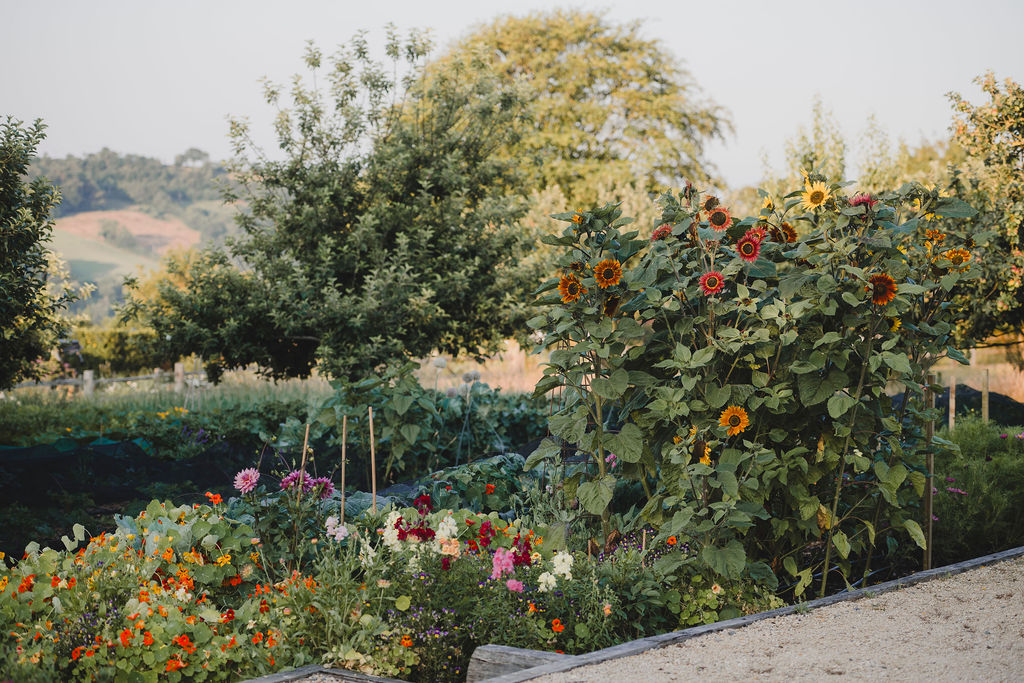
At the heart of Louma is our Kitchen Garden, where much of the produce grown across the season makes its way just a short distance to our kitchen.
By autumn, colourful winter squashes and earthy root vegetables are ready to harvest and store. As the last summer crops leave the polytunnels, hardy winter salads and brassicas take their place, continuing the rhythm of growing through the cooler months.
But what happens beneath the surface is just as important as what we harvest.
Our gardens are cultivated using a no-dig approach, helping to protect the natural structure of the soil and the extraordinary network of fungi and microorganisms living within it.
As beds are cleared, green manures such as clover and phacelia can be planted to keep living roots in the soil, protect it from heavy winter rain and naturally return nutrients to the ground.
Rather than leaving the earth bare, we are quite literally tucking the garden in for winter.
Closing the loop
Louma is also working towards a more circular relationship between the garden and kitchen.
Organic kitchen waste and green garden matter can be composted on the estate, turning what would otherwise be waste into something valuable to feed the soil again.

It is a wonderfully simple cycle: the garden feeds the kitchen, and the kitchen helps feed the garden.
Healthy soil allows us to grow wonderful produce, but for us, flavour matters just as much as responsible cultivation. Vegetables, herbs and fruit grown seasonally and close to the kitchen can be harvested when they are at their best, helping our chefs create dishes that reflect what is actually happening outside.
Over time, we would like to take this relationship even further, exploring seasonal menus that incorporate an even greater diversity of estate-grown vegetables, roots and herbs alongside naturally fermented foods.
It all forms part of our belief that a connection with the land should be something you can taste.
Flowers that follow the seasons
Autumn brings a different kind of beauty to Louma’s Cutting Garden.
The final dahlias offer deep, jewel-like colour, ornamental grasses become feathery and sculptural, and seed heads catch the dew on crisp mornings.
Under Georgia’s direction, our cut flower beds are being developed with the same thoughtful approach as the Kitchen Garden. Flowers are grown using no-dig principles, supported by organic compost and homemade garden feeds rather than relying on conventional chemical treatments.
Perennials and biennials such as foxgloves, delphiniums and sea holly sit alongside annual flowers, helping create permanent root structures beneath the soil.
Our planting choices are also made with pollinators in mind. Open-centred, nectar-rich varieties offer food for bees, butterflies and other insects, meaning a flower can be beautiful in a vase while still playing a valuable role in the garden.
Where possible, Louma-grown and foraged materials are used in arrangements around the property too, reducing our reliance on imported flowers, packaging and floral foam.
Foraging gently from the landscape
Beyond the cultivated gardens, autumn offers a wealth of natural materials.
Crab apples, windfalls and sculptural seed heads appear along field margins and orchards, while hedgerows carry wild sloes, rosehips and the final treasures of the foraging season.
At Louma, foraging is approached with restraint.
We follow a one-third principle, never taking more than a third of a wild plant or stand so that plenty remains for wildlife, natural regeneration and future seasons.
Later in the year, branches, hazel rods, ivy, holly and other foliage gathered through careful woodland management can find a second life in arrangements around the hotel.
Even the mechanics behind those displays matter. We avoid floral foam, choosing reusable or biodegradable alternatives so that natural material can ultimately return to the compost heap rather than becoming waste.

Gardens alive with biodiversity
Our ornamental gardens are designed to be beautiful, but beauty and biodiversity don't have to be competing priorities.
Throughout Louma, perennial planting, native species and climate-resilient plants create gardens that change naturally with the seasons while offering food and habitat for bees, butterflies and hoverflies.
Chemical pesticides and herbicides are avoided in favour of approaches that work with nature, including companion planting and encouraging beneficial insects such as ladybirds and lacewings.
Small areas of wildness are equally important.
Log piles, grasses, insect habitats and undisturbed corners may not always demand attention, but they support the pollinators and other beneficial species that help keep the wider garden in balance.
Beyond the garden gates
This philosophy extends across the wider Louma estate.
Our newly planted heritage orchards will become an increasingly important part of autumn in the years ahead. Traditional varieties of apples and pears will bring new habitats as the orchards mature, as well as the prospect of baskets of late-season fruit ready for the kitchen and pressing.
Elsewhere, conservation-led grazing and more naturally managed field margins help grasses and wildflowers establish themselves, creating habitat for insects, birds and small mammals while contributing to a more resilient landscape.
Woodlands and hedgerows add another layer.
Hawthorn, hazel, holly and other native plants create shelter and natural corridors through the estate. Fallen and standing deadwood is left where appropriate, providing valuable habitat for fungi, beetles and countless tiny organisms.
It means that even the quieter corners of Louma are full of life.
Life around the water
The estate's ponds are another important part of this interconnected landscape.
Planted margins and areas of varying depth provide shelter and breeding spaces for amphibians, insects and birds, while native aquatic plants help maintain a naturally balanced ecosystem.
In summer and early autumn, dragonflies and damselflies dart across the water. As evening falls, bats may arrive to feed on the insects drawn to these freshwater habitats.
The ponds have a practical role too, capturing seasonal rainfall, slowing the movement of water across the landscape and helping it infiltrate naturally into the ground.
For guests, though, they can simply be somewhere beautiful to stop for a moment and listen.
A quieter rhythm
Autumn at Louma is not about the garden coming to an end.
It is about a change of pace.
The frantic abundance of summer gives way to preservation and preparation. Crops are gathered, the larder begins to fill, beds are protected and the landscape is allowed to rest.
For Georgia and the garden team, attention turns to nurturing what cannot necessarily be seen: underground root systems, healthy soil, future habitats and the groundwork for another year of growing.
And for our guests, that work appears in countless small ways: vegetables arriving from garden to plate, seasonal flowers gathered from just outside, butterflies moving through the borders, birdsong on a morning walk, or the crunch of leaves beneath your feet on a woodland path.
At Louma, we want luxury and nature to sit comfortably alongside one another.
Because sometimes the most memorable part of an autumn stay isn't something that has been added at all. It is simply being given the time and space to notice what was already there.


